How One New Tech Could Actually Stop the Coming Flood of AI Fraud - Source: Sean Brizendine, Blockchain Expert

Look, the fraud guys are getting scary good. According to that Visual Capitalist piece pulling from the Sumsub Fraud Report, businesses are bracing for a bad 2026. Sixty-seven percent figure biometric fraud is about to blow up. Over half expect more synthetic identities. And nearly half are waiting on deepfakes, AI-driven attacks, and forged docs to get even worse.
We’ve all seen it coming: cloned voices, fake videos, identities stitched together from bits of real data and pure bullshit. Traditional checks—passwords, static biometrics, even most “liveness” tests—are getting steamrolled because they all rely on something that can be copied, stored, stolen, or replayed. Once it’s out there, it’s game over.
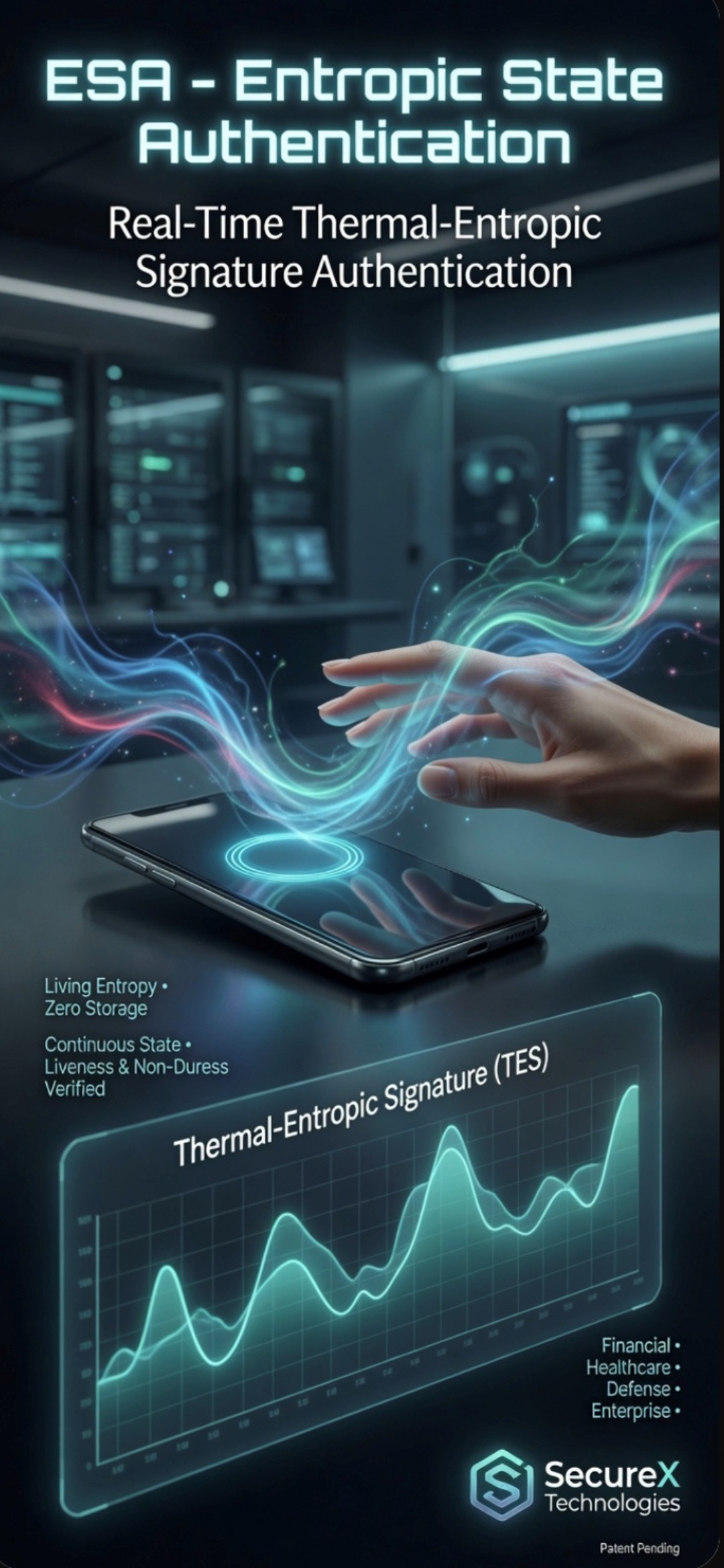
That’s exactly why SecureEntropic™ and its Entropic State Authentication (ESA) by SecureX Technologies USA feel different. It doesn’t try to match a stored template like every other system. It asks a harder, more physical question: Is a living, breathing human actually here right now, producing real entropy?The Core Idea That Changes the Game
ESA taps into the thermal-entropic signature your body kicks off naturally—heat, blood flow, metabolism, all that messy living stuff. It’s not your DNA sequence itself. It’s the chaotic, real-time thermodynamic noise a living person makes. You can’t deepfake that convincingly because it’s not static. It’s not something you can record and replay later. It exists only in the moment.
The SecureEntropic Biometric Widget (runs on smartphones for now) captures this signal when you touch the screen, turns it into a temporary cryptographic key inside a secure enclave, then wipes everything. “Proof, then poof.” No templates sitting in a database waiting to get breached. No reusable biometric data for criminals to steal. This directly slams into the biggest predictions in that fraud report:
• Biometric fraud (67% expecting surge): Traditional face, voice, or fingerprint systems store data that can be spoofed. ESA verifies liveness and presence through something that dies the second you’re done. No storage, no replay attacks.
• Deepfakes and AI attacks (44%): Deepfakes fool visual or audio liveness checks. They can’t fake the actual thermodynamic entropy of living tissue in real time combined with device-specific timing and environmental noise.
• Synthetic identities (56%): You can fake documents and piece together data. You can’t fake a living human’s entropic state at the exact moment of authentication.
• Data breach identity theft (33%): If nothing sensitive is stored long-term, a breach doesn’t hand fraudsters usable keys or templates. The signal is unique to that instant.
It turns authentication from a one-and-done check into a continuous, adaptive state. That matters when organized fraud networks and automated attacks keep scaling up.
Real Talk on Limitations and Reality
This isn’t magic. It’s still in rollout—software-first on phones with hardware versions down the line. It needs good sensor fusion and will get refined over 2026. No system is 100% bulletproof, but anchoring identity in physics-of-life stuff that can’t be extracted or reproduced remotely beats the hell out of anything that lives in a database.
For banks, fintech, healthcare, government, or any high-stakes app, this could be the shift from constantly plugging holes to actually staying ahead. It’s built to slot into existing OAuth flows, so developers aren’t starting from scratch.
The fraud report basically says we’re moving into an era where reactive defenses won’t cut it. You need something adaptive, real-time, and grounded in what fraudsters physically can’t copy at scale.
SecureEntropic™ and ESA look like one of the few approaches that’s actually playing at that level—treating identity as a living, momentary state instead of a file that can be stolen.
If the predictions hold and 2026 brings the wave everyone expects, technologies like this won’t just be nice to have. They’ll be the difference between getting wrecked and staying in business.
Article written by Sean Brizendine, Blockchain Expert
About SecureX Team
The SecureX team brings together experts in Bitcoin security, biometric technology, and blockchain infrastructure.
Related Posts
Updated: The Age of ESA Has Arrived: Real-Time, Non-Reproducible Authentication for the AI and Quantum Era — SecureEntropic™ — Entropic State Authentication - Source: Sean Brizendine, Blockchain Expert
The Wall Street Attack Is a Warning: AI-Driven Cybercrime Is Outpacing Defense—Can Entropic State Authentication Keep Up?- Source: Sean Brizendine, Blockchain Expert